
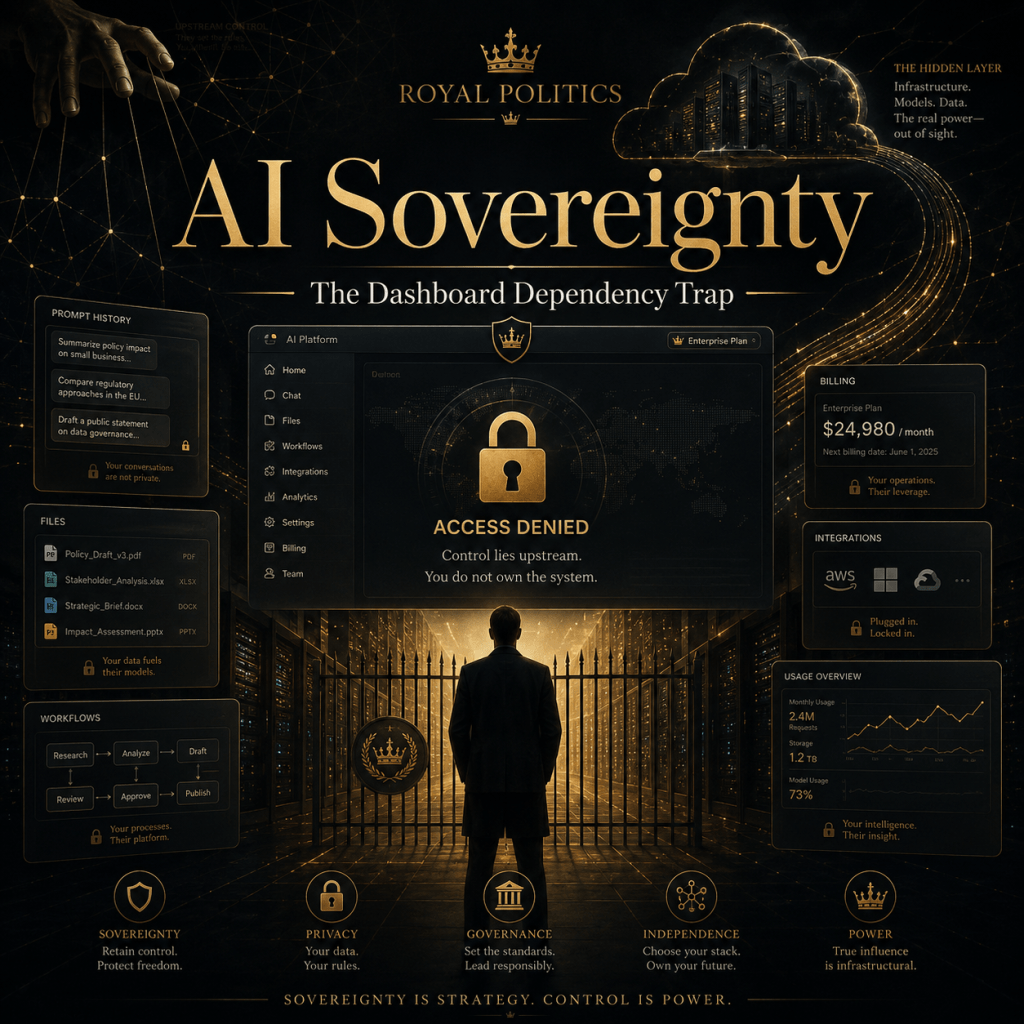
Palantir’s warning about OpenAI, Anthropic, and “tokenmaxxing” points to a deeper governance problem in the AI economy: institutions may be spending aggressively on artificial intelligence while quietly surrendering control over their data, workflows, intellectual property, pricing, dashboard access, and operational intelligence to outside labs or upstream model providers. The issue is not whether AI is useful; the issue is whether companies, creators, governments, and public institutions understand the difference between using AI as a tool and becoming dependent on someone else’s machine. Many AI platforms present themselves as complete technology companies, but if they rely on external models for pricing, compute, refunds, outputs, or policy enforcement, then the customer may only be dealing with a branded access layer. That creates a serious privacy and power concern because prompts, files, likenesses, videos, creative assets, business ideas, usage history, billing records, and project data may sit inside a dashboard the customer does not truly control. If an AI provider can lock a user out for vague reasons like risk review, billing issues, content policy, account verification, or terms-of-service claims, then the dashboard becomes more than software; it becomes a gate over the customer’s work, memory, and ability to operate. The AI problem is not only the model. The AI problem is who owns the intelligence layer after the model enters the institution.
Royal Politics examines power beyond the performance.
Book a strategy session with Royal Politics.
 Royal Politics
Leave a comment